
Islamic Studies for children is designed to nurture faith, character, and understanding of the Prophet’s Sunnah. These lessons help young learners connect with the Qur’an, practice daily worship, and adopt values that shape their lives according to Islamic teachings.
Qur’an and Arabic Learning
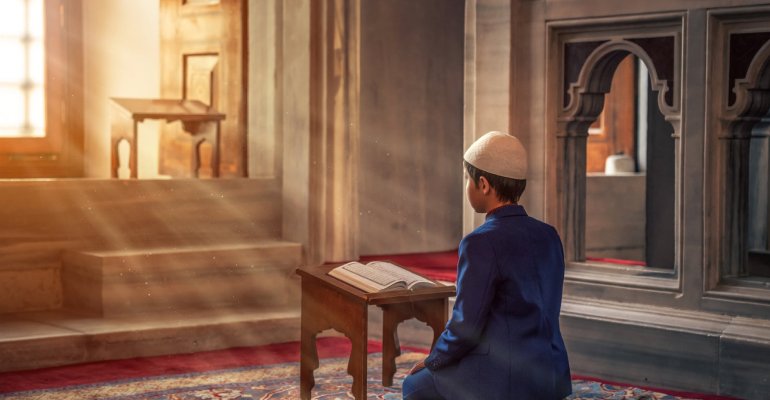
Children begin with basic Arabic to understand the words of the Qur’an. Step by step, they learn recitation with Tajweed, memorisation of short surahs, and comprehension of meanings. This builds both spiritual growth and language skills, making Qur’an study more meaningful.
Following the Sunnah
The Prophet Muhammad (S.A.W.) serves as the best role model for children. Through stories and practical examples, kids learn how the Sunnah guides everyday actions—such as honesty, kindness, and respect for parents. Teachers encourage children to apply these practices in their daily routines.
Key Areas of Focus
- Prayer (Salah): Training children to pray regularly, starting with simple steps and building consistency.
- Morning and Evening Duas: Teaching supplications for protection, gratitude, and blessings.
- Good Manners: Emphasizing respect, politeness, and compassion in line with the Prophet’s example.
- Generosity and Kindness: Inspiring children to help others and share, reflecting the Sunnah in action.
- Qur’an Memorisation: Supporting memorisation and revision of surahs to strengthen spiritual discipline.
Building Character Through Sunnah
Islamic Studies classes highlight how the Sunnah is not limited to rituals but extends to everyday life. Children learn that being truthful, caring for the needy, and showing patience are acts of worship. These values prepare them to grow into responsible Muslims who live by the Prophet’s teachings.
By combining Qur’an learning with lessons on the Sunnah, Islamic Studies for kids provide a balanced foundation of faith and character. This approach ensures that children not only recite the Qur’an but also live by its guidance and the example of the Prophet Muhammad (S.A.W.).
Leave A Comment